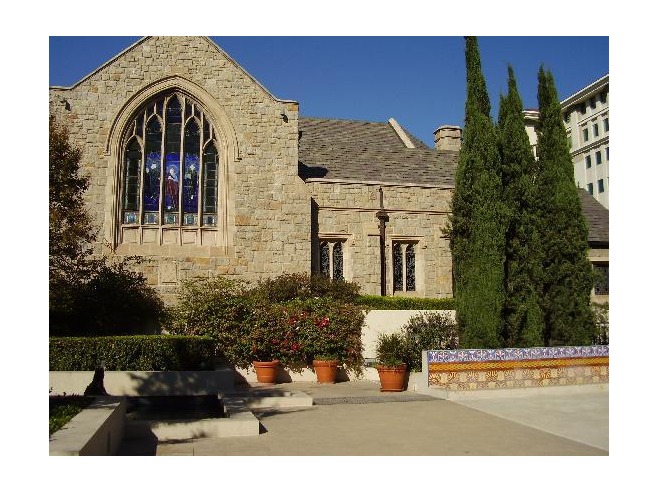
I’ve been quiet with you all because I’ve been so … without words. As a former resident of Pasadena and a resident of Los Angeles county for over ten years of my life, I have been bowled over by the recent fires in southern California. I’ve been concerned about my friends, checking in on those who are evacuated, those who are hosting families who are evacuated and so many who have lost homes, whose friends and family have lost homes, businesses and places of worship.
Like many others, I can’t help but to think about the work of Octavia Butler. I’ve been writing about her as a theologian for the last 25 years. In Parable of the Sower, she wrote about wildfires raging through southern California. At the same time, an authoritarian government is rising with a slogan “Make America Great Again.” Can’t make this stuff up. I love how Butler invokes the Yoruba orişa Oya and how she lifts up a community that walks north to freedom. One verse Butler writes is below:
As wind
As water
As fire
As life
God
Is both creative and destructive,
Demanding and yielding,
Sculptor and clay,
God is infinite potential:
God is change
Butler was prescient, but she was not a prophet. In interviews, she just states that she was concerned about climate change, and she writes about what she thinks would happen if there were no intervention. This was in 1990. It’s all so real and scary now.
As per usual, crisis and disaster and suffering evoke all kinds of questions about the presence and power of God. And a lot of answers are floating around. If you’ve heard any press on the origin of the fires, you know that … it’s complicated. And if you’ve had any conversation about politics in the United States, you also know that … it’s complicated. And we are having to live with the fact that there are histories and politics and policies and science and economics and multiple forces that got us to where we are now.
As someone deeply interested in change, I know that change is fairly neutral. Change will happen. If there’s anything we can rely on, it’s that things will change. Change is sometimes welcome and good; change is sometimes abrupt and difficult.”
Octavia Butler calls us to “shape change.” I think of this as how we have the power to creatively transform or destructively transform the change we experience. We can stick our heads in the sand and pretend things aren’t happening. We can go numb in the face of difficult unwanted change. We can seek refuge in the words of leaders who draw lines between who is welcome and who should be excluded. And these are natural responses to difficult change. But they aren’t particularly helpful.
I believe God is calling us to creatively transform our communities as we move forward. I feel so much hope in seeing how people are coming together to house each other, help each other heal, make food for one another, share helpful advice on next steps, and pray together. I feel hope in the ongoing movements to do more than survive in the current establishment, but to build for a way of care and formation – over unbalanced retribution and punishment. I feel hope in those teaching that God is empowering and equipping us to move forward by caring for all. (BTW I write more about destructive and creative change in chapter five of my book “Making a Way Out of No Way.)

This week, I took a day trip to New York to go to the Brooklyn Museum to see an exhibit on Elizabeth Catlett, a Black revolutionary artist who lived between the US and Mexico. It was bitterly cold, but worth every piece of art I got to see where Catlett lifted up the lives of Black women and campesinos and sharecroppers and workers’ rights as worth of advocacy and beauty. Her life and art wrapped me in rainbows and gave me energy to return home and be about the business of creative transformation in my life.
I share this to say that this is a great time to find refuge in enjoying or creating some art. Literary, culinary, theatrical, performative, visual art can buoy our spirits and remind us that we all have this God-given power to make beauty from ashes and to leave our communities more beautiful than we found them. Not sure what to do? Grab a copy of Butler’s Parable of the Sower.
Meanwhile, keep holding on, taking deep breaths and grounding yourself in art and the company of loved ones.
Dr. Monica